He called out bears to maul children. This is the shocking claim frequently made about 2 Kings 2:23–25. Yet the consonantal Hebrew text itself complicates that surface reading and reframes the event as a covenantal sign-act carried out under the authority of יהוה (YHWH; Yahweh; “He Is/He Causes to Be”), not a private eruption of prophetic anger. When the narrative is read line upon line (Isa 28:10) in its geographic and covenantal setting, the encounter at בית אל (Bethel) emerges as a public rejection of prophetic authority at a rival cultic center, followed by a measured act of covenant enforcement.
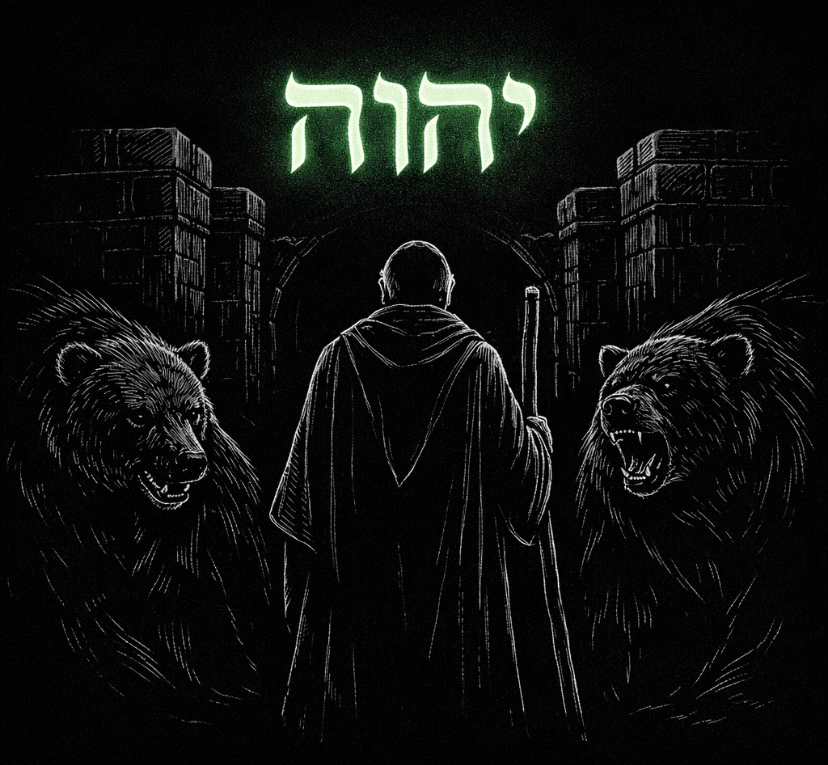
The Hebrew consonantal line reads:
ויצא משם בית אל והוא עלה בדרך
ונערים קטנים יצאו מן העיר
ויתקלסו בו
ויאמרו לו עלה קרח עלה קרח
The phrase נערים קטנים (נערים קטנים) is pivotal. The noun נערים (naʿarim) regularly denotes youths, attendants, or retainers and is used elsewhere for individuals capable of military or civic function (cf. Gen 14:24; 1 Sam 16:11). The adjective קטנים (qetannim) marks relative status or rank as much as physical size. Together, the expression may designate a cohort of junior affiliates or apprentices emerging from the עיר, not toddlers in a playground setting. The verb יתקלסו (yitqalesu), from the root קלס, indicates derisive public scorn. Their chant עלה קרח עלה קרח (“go up, bald one”) invokes the recent עלה of אֵלִיָּהוּ and functions as a taunt dismissing the legitimacy of his successor: a ritualized expulsion within ANE honor-shame dynamics.
The narrative continues:
ויפן אחריו ויראם
ויקללם בשם יהוה
ותצאנה שתים דבים מן היער
ותבקענה מהם ארבעים ושנים ילדים
The clause ויקללם בשם יהוה is determinative: the curse is issued “in the Name of יהוה (YHWH; Yahweh; ‘He Is/He Causes to Be’).” This places the act within covenant jurisprudence rather than personal retaliation. Torah anticipates sanctions for communal contempt and covenant breach, including the sending of wild beasts among a people who walk contrary to יהוה (Lev 26:21–22). The emergence of two she-bears (דבים) from the woodland to strike forty-two participants operates as a public, limited judgment upon a representative group engaged in collective derision at a sanctuary historically aligned with heterodox worship (1 Kgs 12:28–33).
Immediate narrative contrast follows. At Jericho, אֱלִישׁע becomes an agent of restoration:
ויאמר כה אמר יהוה רפאתי למים האלה
Thus says יהוה (YHWH; Yahweh; “He Is/He Causes to Be”): “I have healed these waters” (2 Kgs 2:21). The same prophet who invokes covenant curse at Bethel mediates covenant healing at Jericho through salt, a sign associated with enduring obligation (Num 18:19). The commissioning sequence therefore pairs judgment and restoration in harmony with Torah’s blessings and curses (Deut 28), anticipating later restorative works manifest in יֵשׁוּעַ (Yeshua).
Subsequent accounts sustain this pattern under אלוהים (Elohim; Elohim; “Mighty One/Powerful One”): the multiplication of oil for a widow (2 Kgs 4:1–7), the granting and restoration of the Shunammite’s son (4:8–37), purification of poisoned stew (4:38–41), and provision of bread for many (4:42–44). The Bethel judgment thus functions as an inaugural sign authenticating prophetic office in a contested religious landscape, while the surrounding works demonstrate the covenant aim of life, provision, and restoration for those who heed the word of יהוה.
Works Cited
The Holy Bible, 2 Kings 2–5. Masoretic Text.
Leviticus 26:21–22; Deuteronomy 28; Numbers 18:19.
Isaiah 28:10.
1 Kings 12:28–33.