The Name Through Languages

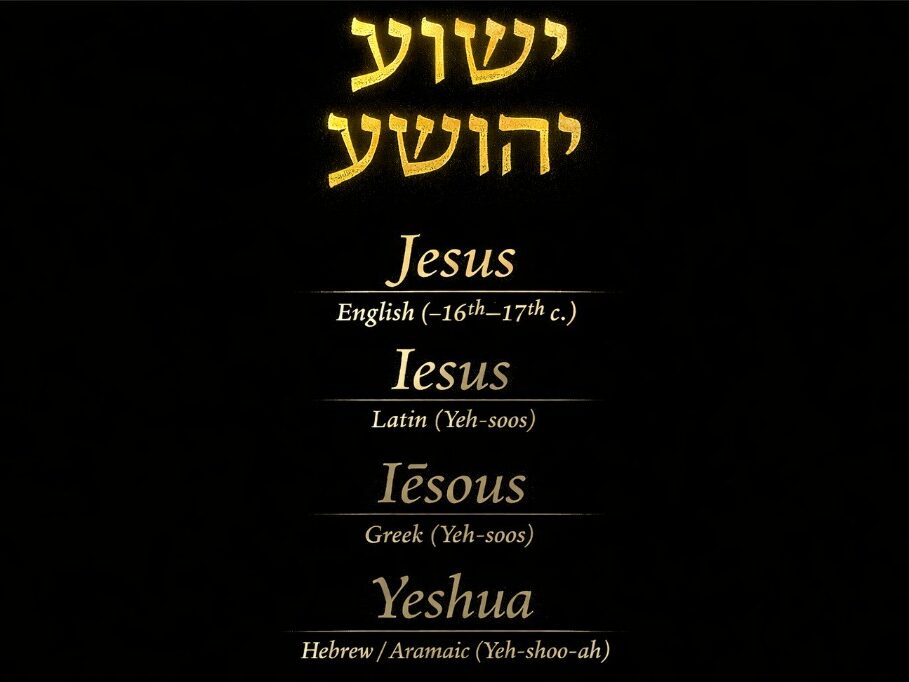
Minimalist black background graphic showing the Hebrew names ישוע and יהושע in gold at the top, with the name displayed below in English, Latin (Iesus), Greek (Iēsous), and Hebrew/Aramaic (Yeshua), centered in a vertical layout.

A visual reflection on the continuity of the Name across languages and centuries — from Hebrew ישוע / יהושע to Greek, Latin, and English — preserving its sound and meaning through time.

Prophetic Authority at בית אל

The Name

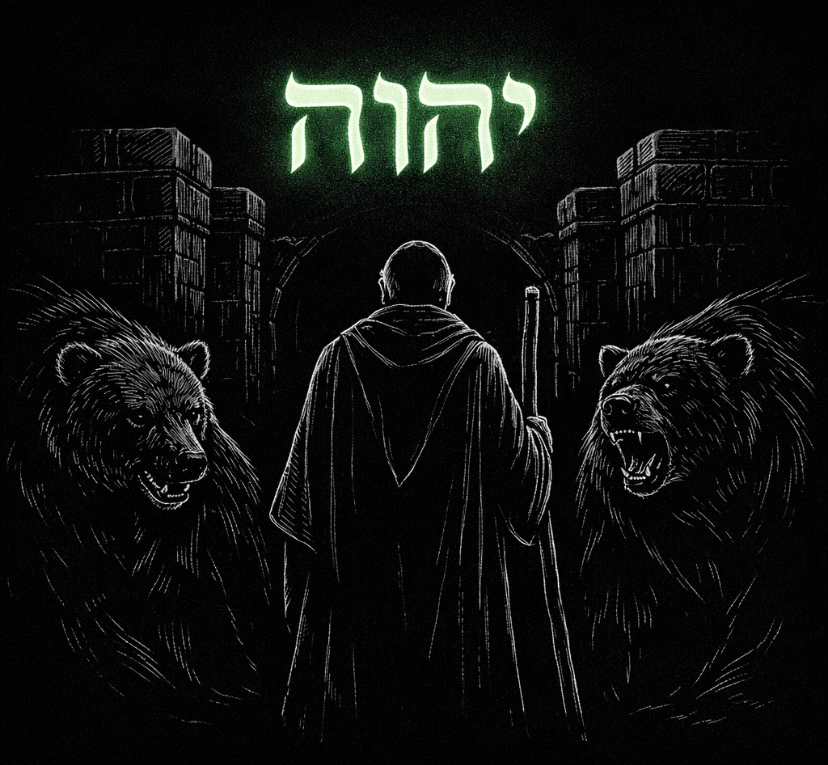
He called out bears to maul children. This is the shocking claim frequently made about 2 Kings 2:23–25. Yet the consonantal Hebrew text itself complicates that surface reading and reframes the event as a covenantal sign-act carried out under the authority of יהוה (YHWH; Yahweh; “He Is/He Causes to Be”), not a private eruption of … Read more

The Righteous Character and Instruction of YAH (יה)

The Righteous Character and Instruction of YAH (יה) preview

Torah, Covenant Administration, and Heart Transformation The Torah reveals the righteous character and instruction of יה (Yah, “the Eternal One”). Nothing about Yah’s nature has changed, and His Word remains eternal. However, there is an important distinction between Torah as divine revelation and Torah as the civil penalty system given to ancient covenant Israel. The … Read more

From the Hebrew Messiah to Jesus: The Name Across Languages

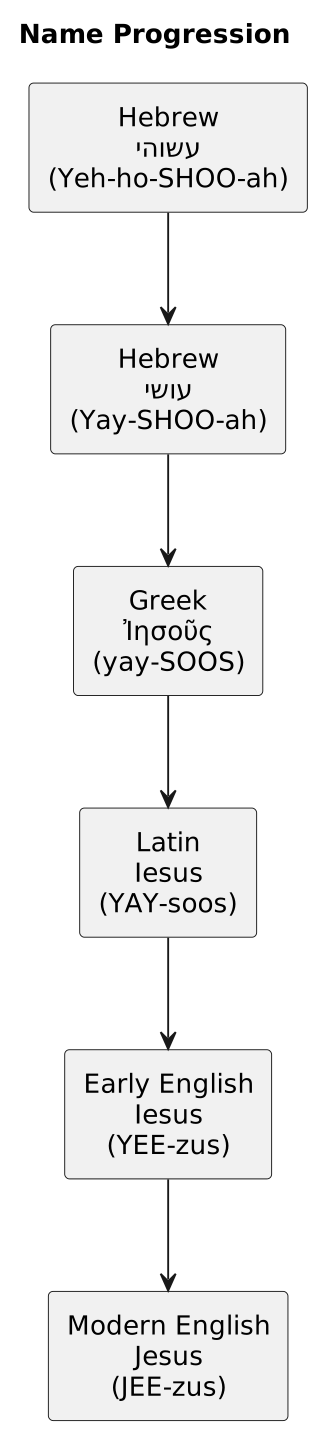
Diagram showing the name progression from Hebrew Yehoshua (Yeh-ho-SHOO-ah) and Yeshua (Yay-SHOO-ah) to Greek Iesous (yay-SOOS), Latin Iesus (YAY-soos), Early English Iesus (YEE-zus), and Modern English Jesus (JEE-zus).

This diagram presents a clear progression of the name across languages and time. It begins with the Hebrew forms Yehoshua (יהושע, Yeh-ho-SHOO-ah) and Yeshua (ישוע, Yay-SHOO-ah), then shows the Greek form Iesous (Ἰησοῦς, yay-SOOS), the Latin form Iesus (YAY-soos), the Early English form Iesus (YEE-zus), and the Modern English form Jesus (JEE-zus). Each stage reflects … Read more

Ι᾿ησοῦς (Iēsous): Name, Form, and Transmission

The following entry reflects the standard 19th-century lexicographical treatment of the Greek name Ι᾿ησοῦς, distinguishing its grammatical forms and historical usage across Second Temple and early Jewish–Christian literature. (Ι᾿ησοῦς, Gen., Dat., and Voc. οῦ, Acc. οῦν; from the Heb. יֵשׁוִּ, Yeshu’a, “Jeshua” or “Joshua;” Syr. Yeshu), the name of several persons (besides our Savior) in … Read more

From Covenant to χάρις: A Theological Drift

From Covenant to χάρις: A Theological Drift preview

The Greek term χάρις (charis), commonly translated “grace” in New Testament literature, did not originate as a neutral or uniquely biblical concept. Rather, it emerges from a deep pre-biblical semantic and religious history embedded in Greek mythology, social economy, and philosophical anthropology. Prior to its adoption as a translation-equivalent for the Hebrew חֵן (ḥēn), charis … Read more

Sanctification and Theophany at Sinai

Sanctification and Theophany at Sinai Wadi er-Raha, the broad plain facing Mount Sinai (Jebel Musa), traditionally identified by ancient sources and modern scholarship as the encampment area of Israel in the Wilderness of Sinai (Exod 19–24). Arrival at Sinai (vv. 1–2) Third month — (no biblical name; by number) Ordinal: Shlishi (שְׁלִישִׁי) Later name: Sivan … Read more

Sequence of Engagement and Alienation

Aḏam → Ḥavvah (KHAHV-vah) → Serpent (nāḥāsh) → Aḏam → Ḥavvah → Serpent → Alienation The assault was directed at you and me. Yet the story is told through Adam, though executed indirectly through Ḥavvah—a sequential strategy rather than a random encounter. The Torah presents a succession: the command was given first to Adam and … Read more

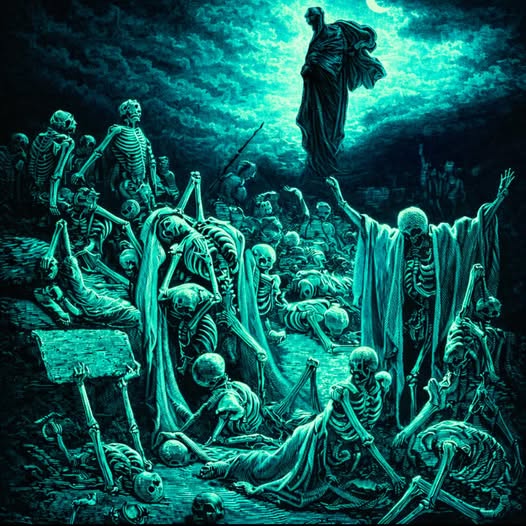
Valley of Dry Bones

The valley of dry bones comes to life as skeletal remains rise and assemble at the word of YHWH, depicting the vision given to Ezekiel.

Ezekiel 37:1–14 ASV (1901), Restored Names The hand of יהוה was upon me; and He brought me out in the ruach of יהוה, and set me down in the midst of the valley; and it was full of bones. And He caused me to pass by them round about: and, behold, there were very many … Read more

The Eagle and the Lion: A Spiritual Comparison

The eagle and the lion are not competing symbols; they are complementary. Together, they illustrate that true spiritual strength is neither passive nor reckless. It is governed, discerning, and timely.

The eagle teaches how to see.
The lion teaches how to stand.

The eagle and the lion spiritual comparison highlights the unique attributes of both creatures and how they embody different aspects of strength.

When vision and authority are held together, power becomes stewardship rather than domination. That balance, Scripture suggests, is the mark of those who endure.