Sanctification and Theophany at Sinai
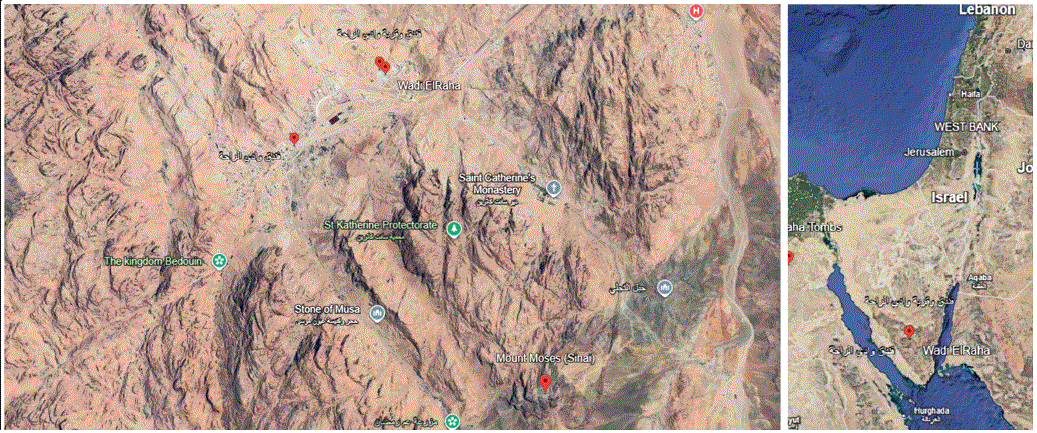
Wadi er-Raha, the broad plain facing Mount Sinai (Jebel Musa), traditionally identified by ancient sources and modern scholarship as the encampment area of Israel in the Wilderness of Sinai (Exod 19–24).
Arrival at Sinai (vv. 1–2)
Third month — (no biblical name; by number)
Ordinal: Shlishi (שְׁלִישִׁי)
Later name: Sivan
Origin of later name: Babylonian
Israel arrives in the Wilderness of Sinai in the third new moon (ḥōdeš shlishi) after leaving Mitsrayim. They journey from Rephidim and camp before the mountain, establishing the setting for what follows. The people are no longer moving; they are positioned for encounter.
Exodus 19:1 (TS2009)
[1] In the third new moon after the children of Yisra’el had come out of the land of Mitsrayim, on this day they came to the Wilderness of Sinai.
Mosheh Ascends; Elohim Speaks (vv. 3–6)
Mosheh goes up the mountain, and יהוה (YHWH) calls to him from above. Elohim reminds Israel of what He has already done—delivering them from Mitsrayim and bringing them to Himself. He then sets before them the purpose of the covenant: obedience to His voice and guarding His covenant will mark Israel as His treasured possession, a reign of priests, and a set-apart nation among all peoples.
Exodus 19:4 (TS2009)
[4] ‘You have seen what I did to the Mitsrites, and how I bore you on eagles’ wings and brought you to Myself.
The People Respond (vv. 7–9)
Mosheh relays these words to the elders and the people. Israel responds as one, agreeing to do all that יהוה has spoken. Their answer is brought back to Elohim. יהוה then declares that He will appear in a thick cloud, so the people will hear Him speak with Mosheh and trust the mediation permanently.
Exodus 19:8 TS2009
[8] And all the people answered together and said, “All that יהוה has spoken we shall do.” So Mosheh brought back the words of the people to יהוה.
Preparation and Sanctification (vv. 10–15)
The people are commanded to set themselves apart over two days: washing garments, refraining from intimacy, and preparing for the third day. A clear boundary is established around the mountain. The mountain is set apart; crossing the boundary brings death. The instruction emphasizes separation between the holy and the common.
Exodus 19:12 TS2009
[12] “And you shall make a border for the people all around, saying, ‘Take heed to yourselves that you do not go up to the mountain or touch the border of it. Whoever touches the mountain shall certainly be put to death.
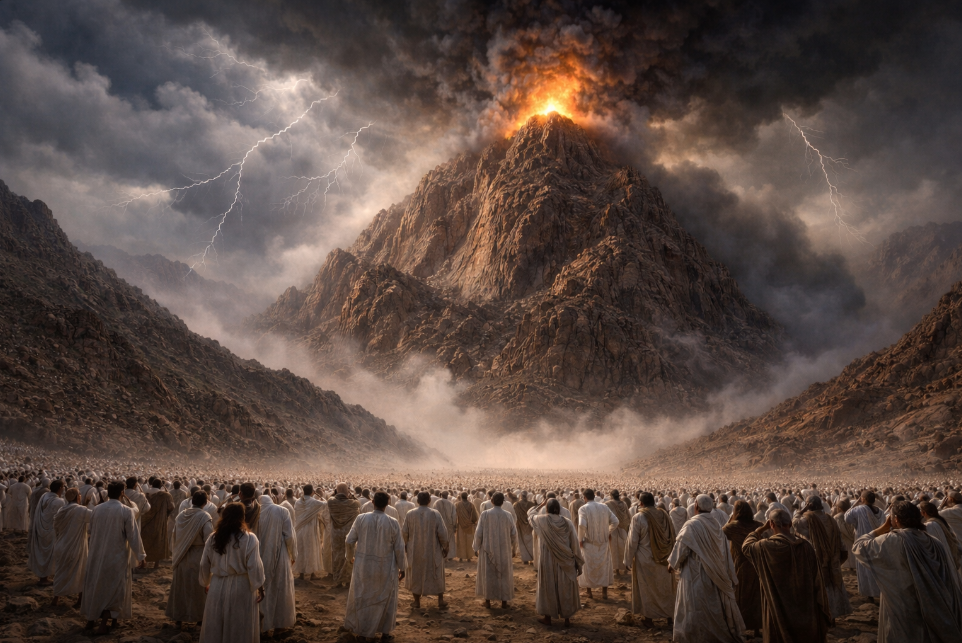
The Theophany: Elohim Descends (vv. 16–19)
On the third day, the mountain becomes the center of overwhelming signs: thunder, lightning, thick cloud, fire, smoke, and the sound of the shofar growing louder. The people tremble. Mosheh speaks, and Elohim answers by voice, confirming the encounter is audible, visible, and communal.
Exodus 19:15-17 TS2009
[15] And he said to the people, “Be prepared by the third day. Do not come near a wife.”
[16] And it came to be, on the third day in the morning, that there were thunders and lightnings, and a thick cloud on the mountain. And a voice of a shophar (b) was very strong, and all the people who were in the camp trembled. Footnote: b Animal horn – traditionally a ram’s horn.
[17] And Mosheh brought the people out of the camp to meet with Elohim, and they stood at the foot of the mountain.
Mosheh Called Up; Boundaries Reaffirmed (vv. 20–24)
יהוה descends upon the top of the mountain and calls Mosheh up again. Yet Mosheh is immediately sent back down to warn the people once more not to cross the boundary. Even the priests must set themselves apart. The emphasis is repeated: holiness is not assumed by proximity; it is guarded by obedience.
Exodus 19:21 TS2009
[21] And יהוה said to Mosheh, “Go down, and warn the people, lest they break through unto יהוה to see, and many of them fall.
The Scene Set for Torah (v. 25)
Mosheh returns to the people and speaks to them. The chapter closes with Israel gathered, the mountain set apart, and the mediator moving between Elohim and the people—preparing for the giving of the Ten Words in the next chapter.
Works Cited
Eusebius of Caesarea. Onomasticon. 4th century CE.
Josephus. Antiquities of the Jews. Book II.
Freedman, David Noel, ed. The Anchor Bible Dictionary. Doubleday, 1992.
Hoffmeier, James K. Ancient Israel in Sinai: The Evidence for the Authenticity of the Wilderness Tradition. Oxford UP, 2005.
Kitchen, Kenneth A. On the Reliability of the Old Testament. Eerdmans, 2003.
Finkelstein, Israel, and Neil Asher Silberman. The Bible Unearthed: Archaeology’s New Vision of Ancient Israel. Free Press, 2001.
Wilderness of Sinai (El Raha / Sinai Highlands). Google Earth.
Coordinates (Wadi er-Raha): 28°34′08″ N, 33°57′08″ E.
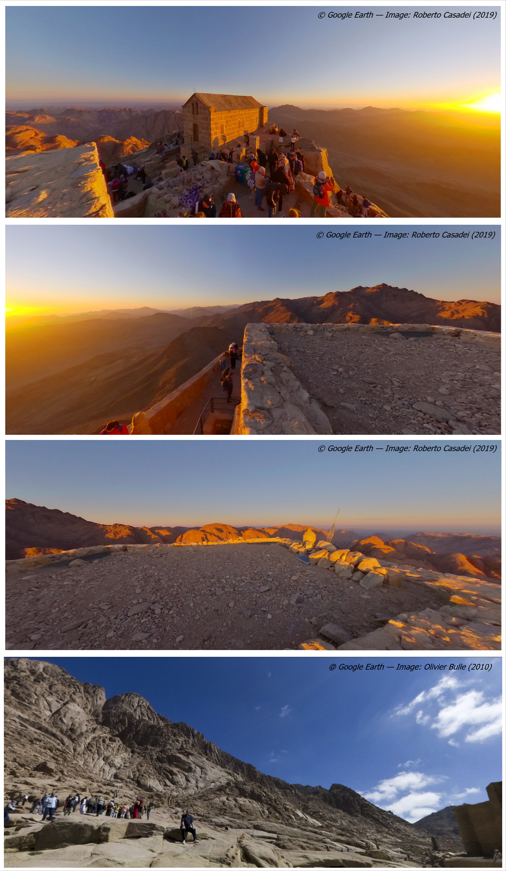
Mount Sinai (Jebel Musa). Google Earth.
Coordinates: 28°32′22″ N, 33°58′31″ E. Summit traditionally identified with biblical Mount Sinai, overlooking the El Raha Plain in the southern Sinai Peninsula.
Wadi er-Raha (El Raha Plain), the broad plain traditionally identified with Israel’s encampment at the foot of Mount Sinai (Exod 19), viewed via Google Earth at 28°34′08″ N, 33°57′08″ E.
Imagery courtesy of Google Earth; ground-level photographs credited in-app to contributing photographer
Onomasticon Entry — Sinai (Exodus 19)